KEYNOTE PRESENTATIONS
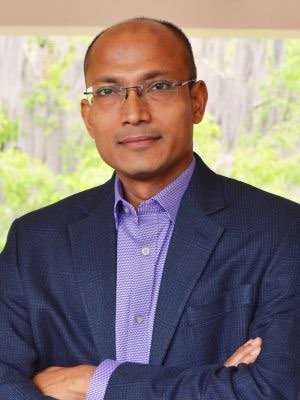
Mark M. Tehranipoor, Ph.D., Fellow of IEEE, ACM, NAI, AAIA, AIIA

Mark M. Tehranipoor


Affiliation:

Intel Charles E. Young Preeminence Endowed Chair Professor in Cybersecurity.
Chair, Department of Electrical & Computer Engineering, University of Florida.
Co-founder of IEEE HOST, IEEE AsianHOST, and IEEE PAINE. Director, ECI Transition Center. Co-director, CYAN and MEST centers.

Aurea L. Rivera, PMP, PMI-ACP, P.E., F.NSPE

Aurea L. Rivera


Affiliation:

Intelligence Community Expert: Data Collection, Analysis & Reporting
Radar Systems & Space Domain Awareness Subject Matter Expert.
STEM Mentor

Dr. Steve Harbour, Ph.D.

Dr. Steve Harbour, Ph.D.


Affiliation:

>Director, AI Hardware Research, Center of Excellence
Parallax Advanced Research

Dr. Matt Areno

Dr. Matt Areno


Affiliation:Chief Technology Officer
Rickert-Areno Engineering, LLC
Co-Chair, MMEC Secure Edge.

Dr. Farimah Farahmandi

Dr. Farimah Farahmandi


Affiliation:

Wally Rhines Endowed Professor of Hardware Security
Associate Director, Florida Institute for Cybersecurity, University of Florida
Focuses on hardware security verification and SoC design trust.

Dr. Navid Asadi

Dr. Navid Asadi

Affiliation:

Affiliation:Electrical & Computer Engineering & Materials Science and Engineering
University of Florida
Director, Security and Assurance Lab; Deputy Director, Florida Institute for Cybersecurity (FSI).

Dr. William Zortman

Dr. William Zortman

Digital Assurance Manager

Affiliation:

Sandia National Laboratories
University of Florida
Specializes in digital assurance and trusted systems.

Dr. Oluwatobi Olabiyi

Dr. Oluwatobi Olabiyi

Director of Engineering

Affiliation:

NVIDIA – AI
Expert in artificial intelligence and engineering leadership.

Dr. Antonio Sanfilippo, Ph.D.

Dr. Antonio Sanfilippo

Chief Scientist

Affiliation:

Qatar Environment & Energy Research Institute (QEERI)
Editor-in-Chief, Green Technology, Resilience, and Sustainability Journal.

Dr. Bayley King

Dr. Bayley King

Research Scientist

Affiliation:

Riverside Research, Dayton, Ohio
Specializes in applied AI and trusted systems research.

Dr. Irfan Ahmed

Dr. Irfan Ahmed


Affiliation:

Engineering Foundation Endowed Professor of Cybersecurity
Virginia Commonwealth University
Expert in network and hardware cybersecurity.

Dr. Darpan Verma

Dr. Darpan Verma


Affiliation: Device Engineer
Intel Corporation

Mr. Oron Mincha

Mr. Oron Mincha

General Manager U.S.

Affiliation:

>CYBERPRO Global
Leader in cybersecurity workforce development and training.

Dr. Usman Ali

Dr. Usman Ali


Affiliation:

ASIC Engineer & Architect, Meta
Expert in ASIC design and semiconductor systems.

Mr. Sayed (Tashfi) Nowroz

Mr. Sayed (Tashfi) Nowroz


Affiliation:

ASIC Hardware Developer, AWS (Amazon)
Works on high-performance ASIC hardware development.

Dr. Paul Simon

Dr. Paul Simon


Affiliation:

Senior Cybersecurity Research Engineer, Riverside Research
Former Senior Hardware Security Engineer at Amazon.

Dr. Boyang Wang

Dr. Boyang Wang

Associate Professor

Affiliation:

Electrical & Computer Engineering
University of Cincinnati
Program Director, Cybersecurity Engineering; research in secure systems and privacy.

Dr. Jeyavijayan 'JV' Rajendran

Dr. Jeyavijayan 'JV' Rajendran

Associate Professor

Affiliation:

Electrical & Computer Engineering
Texas A&M University
Research focus: Hardware security and trust.

Dr. Lijun Qian

Dr. Lijun Qian

Regents Professor

Affiliation:

AT&T Endowed Professor & Director, CREDIT
Prairie View A&M University (PVAMU)
Research in AI, cybersecurity, and wireless systems.

Dr. Osama Fakron

Dr. Osama Fakron

Assistant Professor

Affiliation:

Purdue University
Research interests in computer engineering and hardware systems.

Dr. Samir Iqbal

Dr. Samir Iqbal

Assistant Dean

Affiliation:

Associate Dean of Research at Grand Valley State University, Former NSF Director

KEYNOTE SPEAKERS

Prof. Dr. Noor Zaman Jhanjhi

Prof. Dr. Noor Zaman Jhanjhi

Prof. Dr. Noor Zaman Jhanjhi is a distinguished Senior Professor of Computer Science at Taylor’s University, Malaysia, where he specializes in Artificial Intelligence and Cybersecurity. As the Director of the Research Center, Center for Intelligent Innovation CII, and Program Director for Postgraduate Research Degree Programmes, he plays a pivotal role in shaping academic excellence and driving cutting-edge research initiatives.

Globally acclaimed for his scholarly contributions, Prof. Jhanjhi has been consistently ranked among the world’s top 2% research scientists (2022, 2023, 2024, and 2025) and stands as one of Malaysia’s top computer science researchers. He has been named amongst the top 0.05% of all scholars worldwide according to the 2025 ScholarGPS rankings. His exceptional work has earned him prestigious accolades, including the Outstanding Faculty Member Award (MDEC Malaysia, 2022) and the Vice Chancellor’s Best Research Citations Award (Taylor’s University, 2023).

A prolific author and editor, Prof. Jhanjhi has published over 80 research books with leading publishers such as Springer, Elsevier, IGI Global, Bentham, IET, and Wiley, etc., amassing 1,000+ impact factor points. His mentorship spans 45 postgraduate completions, and he has examined 70+ Ph.D. and Master’s theses worldwide.

As an Editor-in-Chief, Associate Editor, and Editorial Board member for top-tier journals (PeerJ Computer Science, IEEE Access, CMC Computers), he advances scholarly discourse. His leadership extends to securing 40+ international research grants, underscoring his influence in innovation.

A dynamic keynote speaker, Prof. Jhanjhi, has delivered 100+ invited talks and chaired major conferences. His decade-long engagement with ABET, NCAAA, and NCEAC accreditation bodies highlights his dedication to global academic standards. Combining research brilliance, academic leadership, and a passion for mentorship, Prof. Jhanjhi continues to inspire the next generation of computer scientists while shaping the future of AI and cybersecurity.


Dr. Birhanu Eshete

Dr. Birhanu Eshete

Title: The Provenance of Trust: Securing the Deep Learning Lifecycle from Data to Decision

Dr. Birhanu Eshete is an Associate Professor of Computer Science in the College ofEngineering and Computer Science at the University of Michigan–Dearborn, where he directs the Data-Driven Security & Privacy Laboratory. His research develops methods and systems to identify, characterize, and mitigate security, privacy, safety, transparency, and ethical risks in AI systems with emphasis on high-stakes applications such as autonomous vehicles, predictive diagnostics, financial forecasting, and cyber-attack detection.

Dr. Eshete’s research has been published in all leading venues in security, privacy, and AI, including IEEE S&P, ACM CCS, USENIX Security, ISOC NDSS, IEEE/IFIP DSN, ACM PETS, IEEE ACSAC, and IEEE SaTML, and featured in widely accessible venues such as Science Magazine. His expertise has also contributed to national efforts, including the U.S. National Institute of Standards and Technology (NIST) Trustworthy & Responsible AI Resource Center.

His contributions have been recognized with highly competitive awards and funding, including the 2024–2025 Fulbright U.S. Scholar Award from the U.S. Department of State, the 2024–2025 Faculty Excellence in Research Award from the College of Engineering and Computer Science, the 2023 NSF CAREER Award from the U.S. National Foundation, the 2018 USENIX Security Symposium Distinguished Paper Award, and was a finalist for the Best Applied Security Research Award in North America in 2018.


Dr. Selçuk Köse

Dr. Selçuk Köse

Invited Talk: Thrusting the Quantum Computer: Security Threats from Side-channel Leakage to PUFs and Trojans

Selçuk Köse received his PhD degree in Electrical and Computer Engineering from the University of Rochester in 2012. After spending nearly seven years at the University of South Florida (USF), he joined the Department of Electrical and Computer Engineering at the University of Rochester where he is currently a Professor. He previously worked at TÜBİTAK, NXP semiconductor, Intel corporation, and Eastman Kodak. Dr. Köse is a recipient of the NSF CAREER award (2014), USF College of Engineering Outstanding Junior Research Achievement Award (2014), USF Outstanding Faculty Award (2016), Cisco Research Award (2015, 2016, and 2017) and USF Outstanding Research Achievement Award (2017). His research interests include VLSI circuit design, hardware security, cryogenic electronics, and quantum computing. His research has been funded by NSF, DARPA, Department of Energy, SRC, Cisco, Intel, and TSMC.

Superconducting digital electronics provide the classical control and readout infrastructure for many quantum computing platforms, operating in close proximity to superconducting qubits at cryogenic temperatures. This talk will begin with an overview of superconducting digital logic and the physical realization of superconducting qubits, establishing the hardware foundations of contemporary quantum computing systems. After reviewing key operating principles, the focus will shift to the interface circuits that connect superconducting digital controllers to qubit and readout subsystems.

These interface circuits define critical security boundaries by translating ultrafast superconducting signals into accessible electrical quantities. The talk will examine side-channel leakage mechanisms arising from superconducting digital control and interface circuitry, followed by a discussion of hardware Trojans that may be embedded within the digital control and readout stack. Recent work on physical unclonable functions (PUFs) implemented in superconducting digital control circuits will also be presented as a hardware-rooted approach to device identification and authentication.

Looking ahead, this talk argues that hardware trust must be treated as a fundamental design requirement in superconducting quantum computing systems. As these platforms scale, security considerations will increasingly influence the co-design of qubits, superconducting digital logic, and interface circuits, shaping how reliable and trustworthy quantum computers are ultimately built.


INVITED SPEAKERS

Dr. Khaled Saleh

Dr. Khaled Saleh

Affiliation:

Lead Cybersecurity Expert and CEO Fazeal Inc.

Dr. Al Amin Hossain
Dr. Al Amin Hossain
Title: Securing AI with Zero Trust


Affiliation:The United States Air Force, Wright-Patterson AFB, Dayton, Ohio.
Specializes in Zero Trust and Secure AI for systems.

Abstract:

The widespread adoption of artificial intelligence (AI) across mission-critical systems, Internet of Things (IoT) environments, and microelectronics-enabled infrastructures has substantially expanded the cyber-attack surface. Traditional perimeter-based security models are no longer adequate to protect modern AI systems that are highly distributed, data-centric, and continuously evolving. Zero Trust Architecture (ZTA), grounded in the principle of "never trust, always verify," offers a robust, adaptive security paradigm to address these challenges. Accordingly, it is essential to examine the role of Zero Trust as a foundational enabler of secure and trustworthy AI technologies. Our study analyzes the application of Zero Trust principles to AI-enabled enterprise systems, cloud-native platforms, and large language models (LLMs) across the AI lifecycle, including data ingestion, model training, inference, and deployment. Emphasis is placed on least-privilege access, continuous verification, micro-segmentation, and data integrity. The spectacular findings demonstrate that integrating Zero Trust into AI architectures enhances system resilience, mitigates adversarial threats, and enables secure AI deployment within IoT and microelectronics-driven environments.


📢 Call for Papers

Submit Your Research to SATC 2026!

  • 💻 CyberInfrastructure
  • 📡 Internet of Things (IoT)
  • 📊 Microelectronics
  • 🔒 Artificial Intelligence
Submit Now

Publishing Partner